I still pinch myself at my good fortune – not just in having access to my ancestor’s relatively unfettered thoughts and feelings through years of deprivation and war, but for the wealth of supporting extant documentation.

My family’s collection of unpublished letters (over 125) with supporting documentation staggers me. The letters are outstanding, but they are made more remarkable by the photographs and other things that accompany them. Shoot! — I’ve even got the embalming certificate for Mary Shively, calling cards from their daughters, and the battlefield promotion certificate Jacob received when he became Sergeant Shively. I have some of the books he read. I have a notebook – the binding came from an official record of some sort from an archive in the South. He replaced the original pages with what looks to be a discarded muster roll containing farming notations and scribbles from his children.
All the little stuff paints a picture – one that becomes clearer the more I dig.
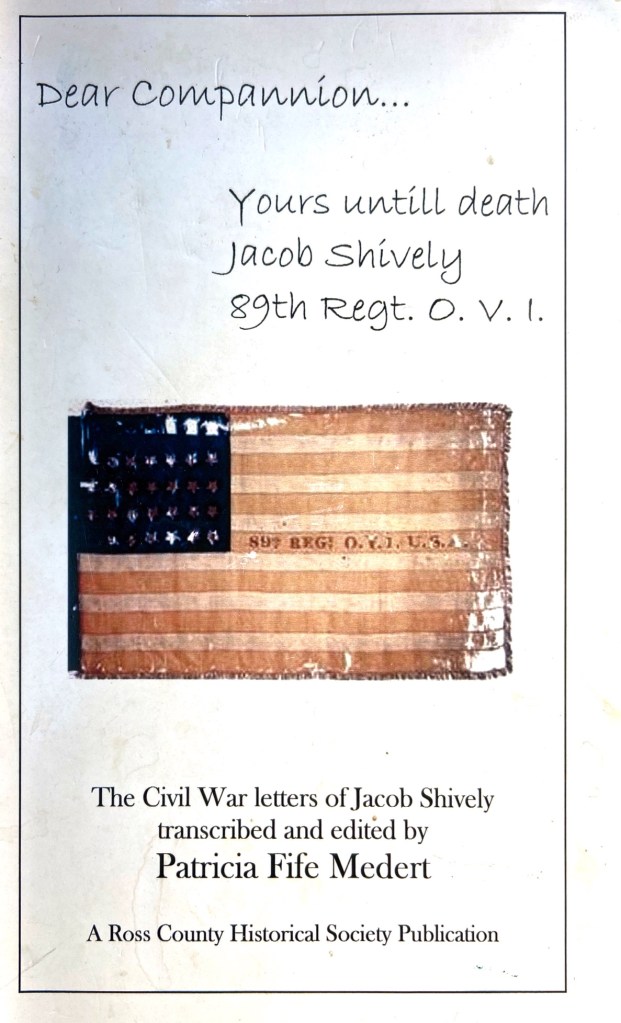
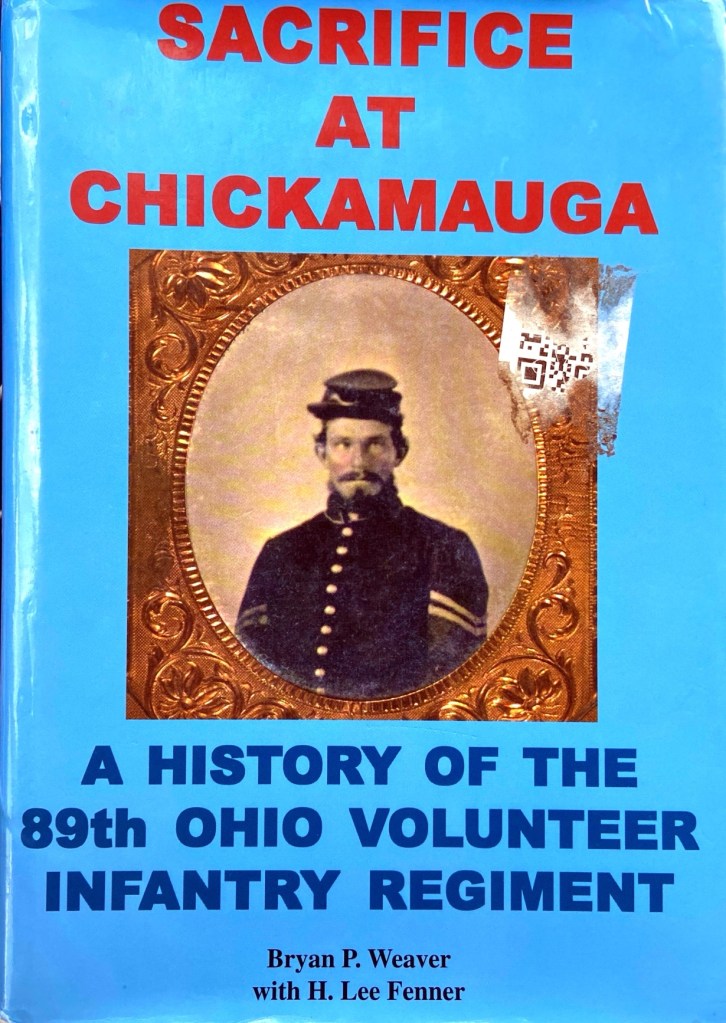
Resources like Pat Medert’s transcriptions of some of Shively’s letters archived in the Ross County Historical Society coupled with Weaver & Feener’s book on the 89th OVI have left me with a problem few have in researching Civil War ancestors: I almost have too much information!
That’s part of the reason I’m writing in this format. I’m a pretty busy guy with my calling as a chaplain, husband, and father. I figure if I wait until I master his story, I’ll probably lose the chance to tell it. So, please excuse me as I write while I research. I’m bound to make errors.
If I do, or if you have additional pieces to the puzzle, please let me know!
As an additional note, many of us who have deployed and endured family separation – who have tasted the bitter pill of war – are hurting with news of current events. Our hearts ache when we remember and relive.
There is an urgency in my soul. Maybe writing this is only for my benefit, but I believe someone else can benefit from reading Jake’s journey. He was a real warrior from another generation who buried friends and experienced horror. He lived the universal inability to foresee the future beauty that can come from pain.
Jacob took physical (a facial wound probably saved his life – more on that later) and mental injuries. While his war wounds impacted his future, it is pretty clear that there was a net positive effect in building the man he became.
We all take wounds – even if we’re not warriors. I need a reminder now and again that God does create beauty from ashes.
 A Thousand Thunders